


Keith Haring: ‘Drawing the Line’
When he came to New York as a student, Keith Haring thought the city’s graffiti the “most beautiful things” he had seen.
“The kids who were doing it were very young and from the streets, but they had this incredible mastery of drawing which totally blew me away. I mean, just the technique of drawing with spray paint is amazing, because it’s incredibly difficult to do. And the fluidity of line, and the scale, and always the hard-edged black line that tied the drawings together! It was the line I had been obsessed with since childhood!”
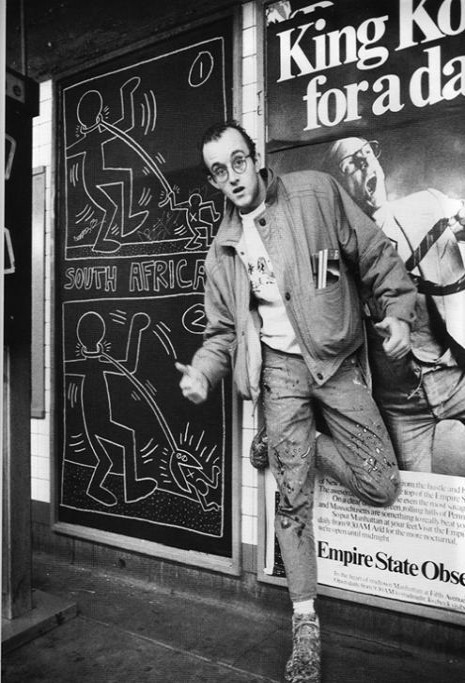
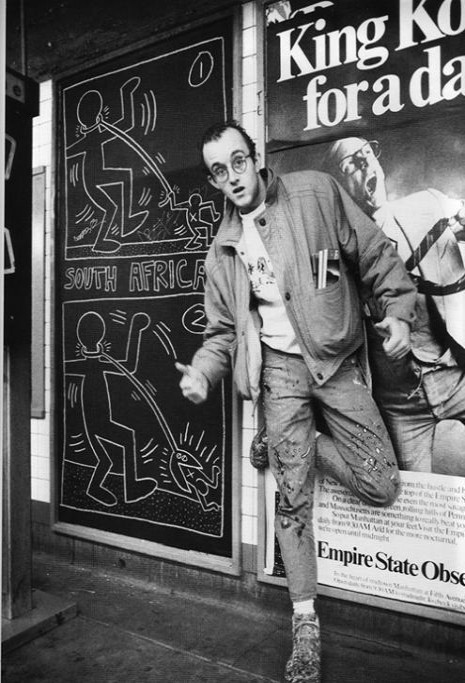
It was whilst traveling by subway that Haring noticed the black paper panels used to cover old adverts, and thought, “These are dying to be drawn on!” Haring picked up some chalk and began drawing his now trademark figures.
“Every two weeks, I’d add new elements to the drawings, Often I’d do thirty or forty drawings in one day. Now I found a way of participating with graffiti artists without really copying them, because I didn’t want to draw on the trains. Actually, my drawing on those black panels made me more vulnerable to being caught by the cops – so there was an element of danger. Well, I started spending more and more time in the subways. I actually developed a route where I would go from station to station to do just those drawings.”
Haring worked hard, and his images spread across the city. By 1982, he had his first one man show. Barbara Haskell, Curator at the Whitney Museum of American Art, claimed Haring made work that was:
“…accessible and generic enough to be accepted by everyman without any critical intervention…”
In so doing, Haring (along with Jean-Michel Basquait and Kenny Scharf) by-passed the Art Establishment, attacked the Art World’s inherent elitism and spoke directly to the public. This allowed Haring to promote debate on issues of politics and sexuality.
Elisabeth Aubert’s film Drawing the Line: A Portrait of Keith Haring skirts around any controversy, sticking to Haring’s irresistible rise and tremendous success during the 1980s. There are choice interviews with the usual suspects, Tony Shafrazi, Barbara Haskell, Dennis Hopper, but most importantly, it is Haring himself who delivers the best.
Haring’s art was essentially ephemeral in nature, which made it precious but also leant itself well to mass production. In many respects mass production ensured Haring’s success and public profile. This has ensured the incredible success of his estate since his tragic and untimely death in 1990. Too often the money aspect (the gimmicky success of his art as pencil cases, greetings cards and wrapping paper), tends to overshadow Keith Haring the man – the brave and powerfully exhilarating creative life force, whose natural exuberance still inspires.