


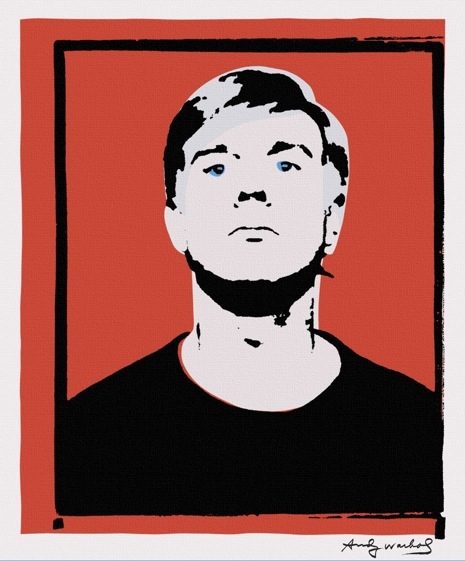
A head-scratching controversy has been brewing in the art world of late over a 1964 self portrait of Andy Warhol. Or more accurately put, a series of ten self portraits of the artist that used to be by the artist, but now aren’t, so they’re not self-portraits anymore, they’re just portrait portraits not by Warhol anymore despite being signed by him. Got it?
Maybe I should explain a little bit better: Warhol’s iconic Red Self Portraits (as the suite is known) have been decreed fakes by The Warhol Foundation, the New York-based body that declares Warhols authentic or not. Clearly there are a lot of Warhol forgeries floating around in the art world and let’s face it, a Warhol would be rather hard for the layman to authenticate.
With Warhol there is also the the issue of “who” actually painted the work or who pulled the screens for the serigraphs. In the 1960s it was just as likely to be studio assistants Gerard Malanga or Billy Name as Warhol himself. In the 1970s, it would have likely been Ronnie Cutrone. Everyone knows that when Warhol produced work at his “Factory” it was with a mechanical process, done by others and only supervised by the artist, who for the most part, only touched his pieces to sign them. This is a fairly well-established fact! (Malanga has long held that he painted the electric chairs series and few would dispute this claim).
However, due to a set of criteria that I find difficult to fully understand (read more about it below) somehow, someway this rather well-known Warhol self portrait became persona non grata to the Warhol Foundation and the owners are fighting back at what they consider an arbitrary and unjustifiable call, rendering once incredibly valuable—and signed!—Warhols absolutely worthless.
From The New York Review of Books “What is an Andy Warhol?” by Richard Dorment:
[O]ne picture in the series, now owned by the London collector Anthony d’Offay, is signed and dated by Warhol, and dedicated in his own handwriting to his longtime business partner, the Zurich-based art dealer Bruno Bischofberger (“To Bruno B Andy Warhol 1969”). Since the Renaissance, a signature is the way artists such as Mantegna and Titian acknowledge the authenticity of their work.
As if this were not enough to authenticate the work, the Bischofberger self-portrait appeared in Rainer Crone’s 1970 catalogue raisonn?ɬ