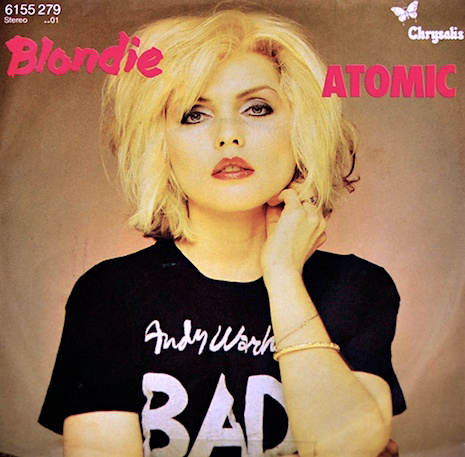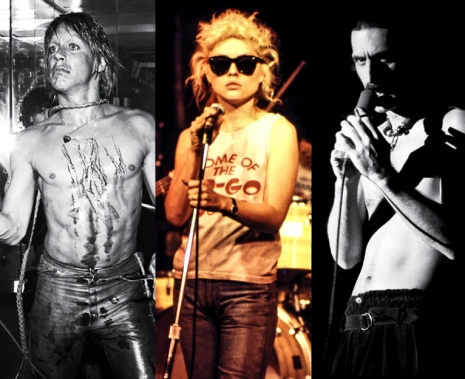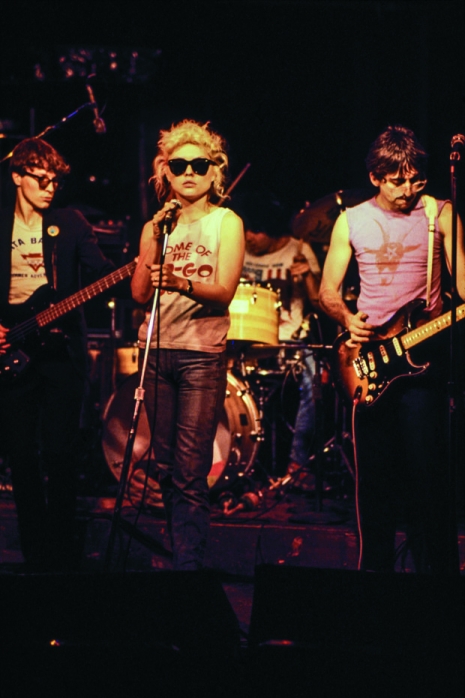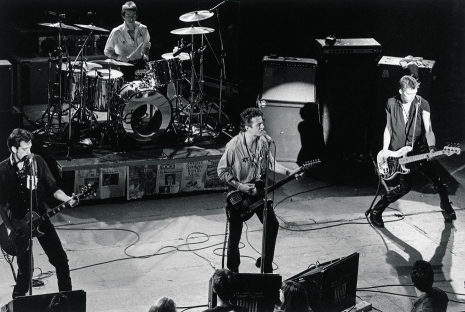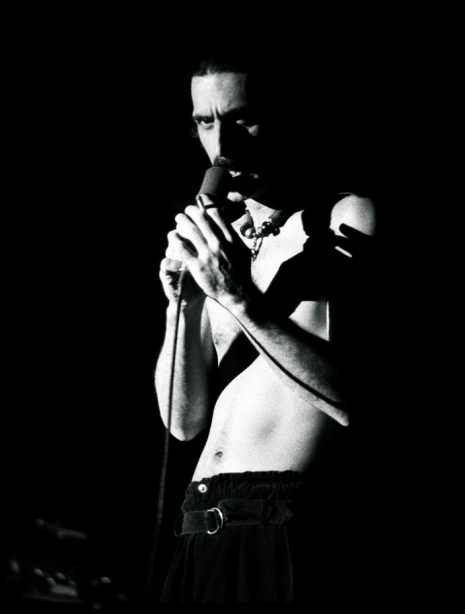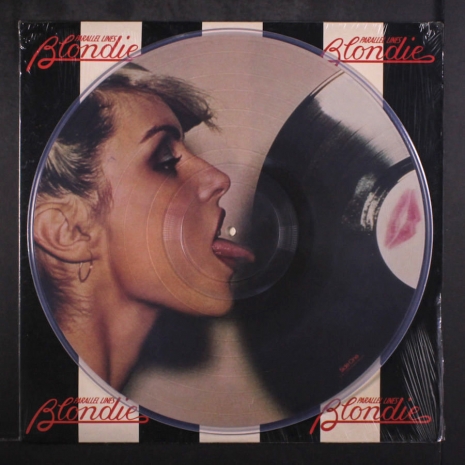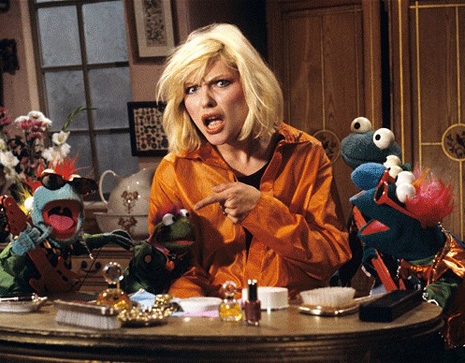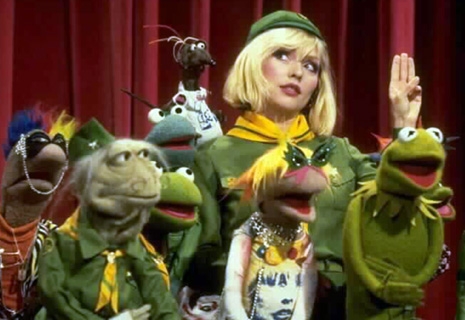
This Dutch TV documentary from 1977 captures some brilliant performances by The Stranglers, Blondie and The Sex Pistols. The bands are firing on all cylinders as they perform in Amsterdam.
In 1977, this is what was moving my world. I had just arrived in New York City and I felt like a sail in a hurricane. Slept all day and hit the clubs at night to see a rock revolution in the making.
The Stranglers at the Second Avenue Theater were particularly awe-inspiring. Unsung heroes of rock and roll, which is probably as it should be - no more heroes. Though, I have my share.
The Stranglers - No More Heroes, Something Better Change
Blondie - Detroit 442, Love at the Pier
Sex Pistols - E.M.I., Pretty Vacant, Anarchy in the UK
The video quality is pretty rough, which seems appropriate - like an underground transmission from the distant past. It’s also in Dutch without English substitles, but it hardly matters. The music speaks for itself.
Here’s a recently unearthed clip of Blondie being interviewed on Australian TV show Nightmoves in 1978. The band offers a concise mini-history of the term “new wave.”
This Channel 4 UK program from the mid-80s compiles some incredible performances culled from Tony Wilson’s late 70s Granada TV series, So It Goes. Includes the Sex Pistols, The Clash, Buzzcocks, Iggy Pop (with horsetail sticking out of his ass and saying “fucking” on 70s TV), The Fall, The Jam, Elvis Costello, Blondie, Penetration, Wreckless Eric, Ian Dury, Tom Robinson, Magazine, John Cooper Clarke, XTC, Siouxsie and the Banshees, Sham 69 and ending with the classic clip of Joy Division performing “Shadow Play.” Many of the groups represented here were making their TV debuts on So It Goes, a regional tea-time program.
The always beautiful Debbie Harry talks fashion, clothes and style, before modeling a selection of Stephen Sprouse’s designs, in this interview from 1979.
Interviewer: Did you grow up around fashion?
Debbie Harry : No, not really. I grew up in New Jersey.
Demo of “Platinum Blonde” produced by Alan Betrock in 1975. It wasn’t released until 2001 as a bonus track on a re-master of Blondie’s self-titled debut album.
I gotta be a platinum blonde!
I gotta be a platinum blonde.
I gotta be a platinum blonde!
I’ll hit the bottle baby.
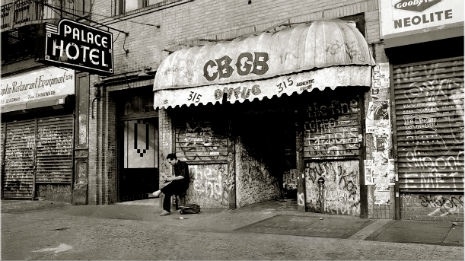
The video includes some shots of CBGB and the Lower East Side just before they became rock and roll Meccas. I have the feeling that former art student and Blondie founder Chris Stein directed this. But I don’t know it for a fact. Anyone know?
Update: DM reader Michael says the video is a segment from from Amos Poe’s Blank Generation. Been awhile since I’ve seen Poe’s film, but it makes sense to me - right place, right time.
When I was growing up in the late 1960s and early 1970s, Top of the Pops was essential, nay compulsory viewing. You see, for a certain age group TOTP was the only music show on British TV. Yes, there was the excellent Old Grey Whistle Test with “Whispering” Bob Harris, which had Zappa, The New York Dolls, Deep Purple and alike, but that went out long after sundown and well past most young uns bedtimes. It would really take until the arrival of the pop promo for music shows to become ubiquitous, which meant back in the days of mop tops, glitter and platform boots, Top of the Pops was King.
Top of the Pops was the BBC’s legendary, Top 40 chart run-down show. It ran between 1964 and 2006, when it was pulled by the Beeb bosses due to a lack of viewers or, too much competition - depending who you read. It was an inevitable demise for music had changed after Rave, and the diversity and choice available meant what most youngsters listened to was rarely reflected by a show centered around the record sales of bland and talentless groups squeezed out by music industry execs.
Moreover, because TOTP was a chart run down show, you were likely to see David Bowie in the same studio as The Osmonds or, The Sex Pistols on the same show as Hot Chocolate. Even so, there was always moments to treasure from Jimi Hendrix, to Bowie’s “Starman”, Alice Cooper’s “School’s Out”, The Smiths with a gladioli-waving Morrissey singing “This Charming Man”, to Blondie “Dreaming”.
And yes, there was The Beatles, The Stones, The Kinks, The Who, The Move and so on, right up to The Damned, The Jam, Marc Almond, and even Nick Cave. But for all the great and the good, there was always a lot of shit. Something that is more than apparent in this 2-hour compilation of forty years of Top of the Pops. It’s an odd mix with some great, and some inexcusable songs, and a lot of brilliant ones missing. Yet, for all the good, the bad and the ugly, it does tell a story of how music has changed for better and worse over the past four decades.
Top of the Pops 40th Anniversary 1964 - 2004
1964: Billy J. Kramer & The Dakotas - “Little Children”
1965: Sandie Shaw - “Long Live Love”
1966: The Seekers - “The Carnival Is Over” (Performance was from 1965)
1967: Procol Harum - “A Whiter Shade of Pale”
1968: The Crazy World of Arthur Brown - “Fire”
1969: The Hollies - “Sorry Suzanne”
1970: Free - “All Right Now”
1971: T.Rex - “Get It On”
1972: Roxy Music - “Virginia Plain”
1973: Slade - “Cum on Feel the Noize”
1974: The Three Degrees - “When Will I See You Again”
1975: Steve Harley & Cockney Rebel - “Make Me Smile (Come Up and See Me)”
1976: The Real Thing - “You to Me Are Everything”
1977: Queen - “Good Old Fashioned Lover Boy”
1978: The Jam - “Down in the Tube Station at Midnight”
1979: Ian Dury & The Blockheads - “Hit Me With Your Rhythm Stick”
1980: Adam and the Ants - “Ant Music”
1981: The Human League - “Don’t You Want Me”
1982: Culture Club - “Do You Really Want to Hurt Me?”
1983: UB40 - “Red Red Wine”
1984: Wham! - “Wake Me Up Before You Go-Go”
1985: Eurythmics - “There Must Be an Angel (Playing with My Heart)”
1986: Pet Shop Boys - “West End Girls”
1987: Bee Gees - “You Win Again”
1988: Yazz And The Plastic Population - “The Only Way Is Up”
1989: Lisa Stansfield - “All Around the World”
1990: Sinéad O’Connor - “Nothing Compares 2 U”
1991: Seal - “Crazy”
1992: Stereo MCs - “Connected”
1993: New Order - “Regret”
1994: Blur - “Parklife”
1995: Take That - “Back for Good”
1996: Oasis - “Don’t Look Back in Anger”
1997: Spice Girls - “Wannabe”
1998: Manic Street Preachers - “If You Tolerate This Your Children Will Be Next”
1999: Ricky Martin - “Livin La Vida Loca”
2000: Sophie Ellis-Bextor & Spiller - “Groovejet (If This Ain’t Love)”
2001: Texas - “I Don’t Want a Lover”
2002: Status Quo - “Rockin’ All Over The World”
2003: The Darkness - “I Believe in a Thing Called Love”
2004: Michael Andrews Featuring Gary Jules - “Mad World”
Post modern bubble gum. Blondie on Japanese teen show Popteens in January 1978.
Way before they scored a hit in the States, Blondie were huge in Japan. They were the rock and roll version of Andy Warhol’s Campbell soup can, a distillation in one indelible image of something so American yet so universal. Pop!
If you’re a hardcore Debbie Harry fan, you probably already knew about this claim made back in 1989. It’s news to me, tho…
From The Sun:
The singer, 65, said she accepted a lift in the early ‘70s from the maniac - who bludgeoned, strangled and raped 30 women.
But Debbie sensed something was wrong when she saw the car had no door handles on the inside.
She said: “The hairs on the back of my neck just stood up.
“I pulled the door handle from the outside. He tried to stop me by spinning the car, but it helped me fling myself out. Afterwards I saw him on the news. Ted Bundy.
Gary Valentine (birth name Gary Lachman) was a founding member of Blondie, playing bass with the group from 1975 to ‘77. He wrote one of the band’s defining songs ‘X Offender’ and one of their biggest hits, ‘(I’m Always Touched by Your) Presence, Dear’. He went on to form his own band The Know in 1978 and briefly played guitar with Iggy Pop in 1981.
Valentine became a dedicated writer in 1996 and published his first book ‘Turn Off Your Mind: The Mystic Sixties and the Dark Side of the Age of Aquarius’ in 2001. His memoir ‘New York Rocker: My Life in The Blank Generation’ is one of the few accounts of the NY punk scene that gets it right. Since then he’s published a series of books on the occult, philosophy, psychology, suicide and politics. In this interview with Cherry Red Records’ Iain McNay, Gary discusses his musical past and his life long interest in the inner workings of the human psyche.
How can it be that we haven’t yet covered Blondie on this blog? What a tragic oversight! One that I must redress immediately…
I absolutely loved Blondie when I was a kid, after discovering them on Don Kirshner’s Rock Concert when I would have been about ten. I recall being transfixed by how beautiful Debbie Harry was and thinking how cool she dressed. I had never seen a girl who looked like this before… and I was quite impressed. Debbie Harry made a strong impression on my young mind that a keen and idiosyncratic fashion sense most probably signaled a female creature of high intelligence (nearly, but not always, true). I was a fan from that moment on, believe me when I tell you…
The first Blondie song I heard on that day was In The Sun. I danced and pogoed around my grandparent’s living room in my socks, sliding on the floor as I did so. Watch the clip below. It was an exhilarating thing to see something like this back then. I was a kid very attuned to rock music—the way most ten-year-olds today are into SpongeBob SquarePants—and Blondie was a real sit up and pay attention change of pace from Foghat, Uriah Heap and REO Speedwagon, the groups normally seen on Don Kirshner’s Rock Concert.
Completely aside from the insanely sassy gorgeousness of Debbie Harry, Blondie really stood apart musically from everything else that was going on at the time. Their songs were catchy, upbeat and fun. Despite their CBGBs pedigree, they really were never punks. There was a knowing calculation behind their persona, a campy, cabaret vision of ‘60s girl groups and Farfisa-infused garage pop.
For my money, the greatest artistic statement made by the band is 1980’s Autoamerican, an album reviewed poorly when it came out and that has never really been properly re-evaluated by either critics or audiences.
Autoamerican has aged very, very well. It doesn’t sound like anything else other than Blondie and so is a bit timeless in that sense. The opening track, Europa, a brooding modernist instrumental that dissolves into a spoken word rant from Harry extolling the virtues of cars. It’s an amazing song and a cool way to open the collection. The album contains both The Tide is High (originally a late ‘60s rocksteady hit in Jamaica for the Paragons and U-Roy—I bow to their genetic coolness for knowing about this song then) and Rapture, the song that, more than any other piece of music introduced the world to the concept of what rap music was. It’s a masterpiece of pop. I listened to it three times today—quite loud—and the skill, charm and verbal dexterity with which Debbie Harry casually rattles off her dada-hipster rhymes still astonishes 30 years later. It’s got a groove as funky as one written by James Brown, Prince or George Clinton, a feat almost no other white group can lay claim to.
My favorite moment on Autoamerican is T-Birds, a soaring piece of road music featuring angelic backing vocals courtesy of Flo and Eddie. If you’ve never heard Autoamerican before—and you call yourself a music fan—get your hands on it and give it a chance. Truly Autoamerican is one of the great lost albums of the New Wave era.
Bonus clip: Blondie do a cover of Goldfinger on German television’s Musikladen show: in 1977:
It seems like there’s a new documentary on Punk Rock all the time and they all tread fairly predictable paths. Still, this episode of the great BBC series Seven Ages of Rock, titled Blank Generation is one of the better ones I’ve seen. In six parts on YouTube.
I started listening to this in the car the other day and I must say to the compiler: Well done, sir! This absolutely blew me away.
What is it, you ask? A monstrous 12 CD set of female fronted punk bands from all over the world from the mid to late ‘70s to the mid 80s (and a little beyond). Some of the artists you’ve heard of (Blondie, Crass, The Avengers, Honey Bane, Teenage Jesus and the Jerks, Rezillos, Slits, Malaria!) but others, trust me on this, there’s just no way you could have heard of all of them. The fellow who compiled this beast is a master. An expert’s expert.! A maven’s maven!
This represents a deep education in this exciting sub-genre of punk. It would be overstating the case to say it has aspirations of being a Harry Smith-type collection of punk and obscure hardcore bands, but some of this stuff I don’t think I’d ever come across if given two lifetimes. Apparently some of these songs come from cassettes, probably copied one at a time. There are obviously plenty of the tracks that were taken from vinyl 45 RPM records. And the stuff from the Eastern Bloc countries…. where did he get this stuff?
What a maniac! It must have been really hard to collect all of these songs, even in this day and age. Without a deep knowledge of the subject, it would be difficult to even search for some of these records on Google. Like I say, it’s impressive.
From the Kangknave blog (where you will find all of the download the links and a track listing):
This is a pretty insane project put together by my pal Vince B. from San Francisco a few years back. As the title indicates, this is a homemade 12 x CD-R (!) compilation of punk bands fronted by female vocalists from 1977 to 1989. More like a giant mixtape than a compilation, as he only made 36 copies which he sent to friends and people who submitted material. You may notice that some of the bands didn’t have a steady female vocalist (The Lewd, etc.) but he still included songs that were sung by another member of the band. This is as international as it gets, with stuff ranging from world famous Blondie or Crass to the most obscure Eastern European cassette compilation veterans. The boxset came packaged in a handnumbered fancy translucent lunchbox enclosing all 12 CD-Rs, a stack of full-colored cards featuring comprehensive tracklist and artwork/info, as well as a manga pin-up figure! Talk about a labor of love.
Childhood movie-going usually falls into two categories: Movies you want to see and do, and movies you REALLY want to see but are forbidden to. Along with Equus and The Exorcist, Alan Parker‘s Midnight Express, for me, fell into that later category. Drugs, Turkish prisons, male-on-male rape? No way was I gonna talk my preteen self into that one. That isn’t to say, though, that I couldn’t get my hands on the Giorgio Morodersoundtrack—something I played obsessively, and still hear faintly whenever I’m (not infrequently) trying to jump a wall.
Moroder went on, of course, to even greater fame with Blondie, Donna Summer, even Japan. The 70s synth icon turns 70 (!) next Spring, and still lives in Italy, where he scored most recently of all things the soundtrack to Leni Riefenstahl‘s last film, the marine documentary, Impressionen Unter Wasser. You can find an excellent assortment of Moroder-related videos, here. Or simply play the below video a few times and find a wall or two.