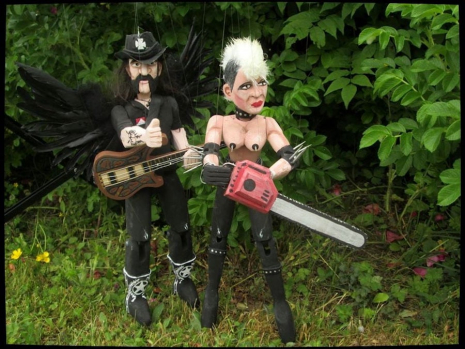
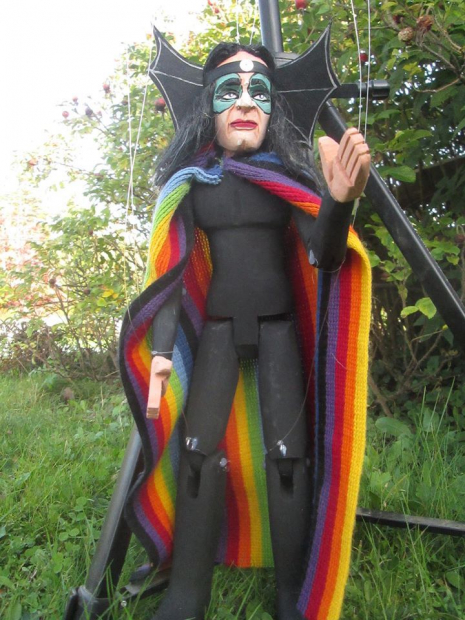
Lemmy and his trusty Rickenbacker bass and his pal Wendy O. Williams with her chainsaw. These marionettes were made by Canadian artist, Darren Moreash of Darrionettes.
If there is one thing I have learned as a contributor to Dangerous Minds for the last seven years is this—you can always count on the members of this collective to bring things to your attention that you perhaps did not know existed. I’ve done this many times myself here, including when I wrote about the fact an anatomically correct GG Allin marionette exists, poop stains, and all dubbing him the “Masturbator of Puppets.” I still get a kick out of that wordplay because I am, as far as you know, a fifteen-year-old boy. Also, my DM colleague, the always intriguing Paul Gallagher posted about these gorgeous marionettes fashioned after rock and roll royalty last summer, and boy, did you all dig that (as you should).
Anyway, as people do, I recently spent too much time scrolling through my social media feeds and looking at old photos of Alice Cooper from the early 70s and BOOM. Suddenly there was a photo of Alice holding an Alice Cooper puppet by its little paddle control that pulls its strings, and the search to find out more began.
This brings us to Canadian artist (and stand-up metal fan, I might add) Darren Moreash—the self-dubbed “Geppeto” of Harrietsfield, Nova Scotia. And Moreash’s efforts have brought him good fortune. Apparently, when he was still dating his soon-to-be wife, he gifted her with an Alice Cooper marionette. In 2012, Cheap Trick used puppets Moreash made in their images for their video “I Want You For Christmas.” Of the countless marionettes Moreash has produced during his lifetime, he has been able to gift them to many of his childhood heroes like Lemmy Kilmister and Stan Lee.
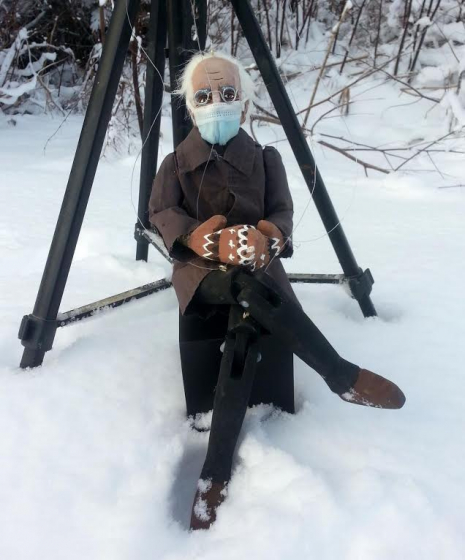
Now, I have to say that my kid went through a phase when he was a little kiddo, during which he became quite enamored with marionettes. And I gotta say, they were a lot of fun to play with once you got the hang of making them move the way you wanted. If I had known about Moreash during that time period, I would absolutely be the proud owner of a David Bowie marionette that I would lie to people about, telling them it’s really for my kid. In the past, Moreash’s marionettes have been auctioned off for charity fetching as much as $500. Anyway, as it’s the photos you came here for so, I’ll stop jawing so you can keep scrolling and see some of Moreash’s marionettes. If you are curious, yes, it does appear that you can get in touch with Moreash and have one of his wooden creations for your very own, such as his latest, a marionette in honor of the Bernie Sanders mitten meme. More info on that, here.
Feel the BERN!
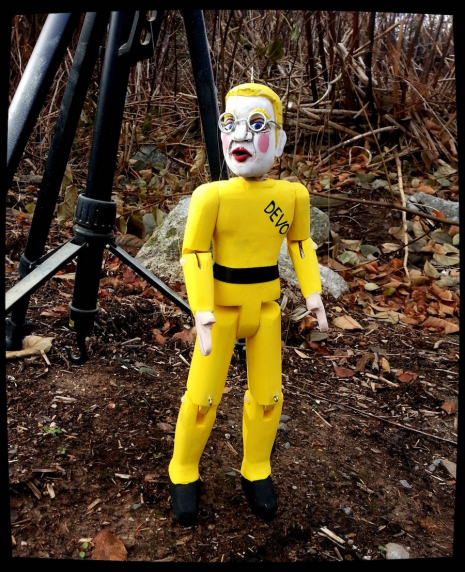
Booji Boy!
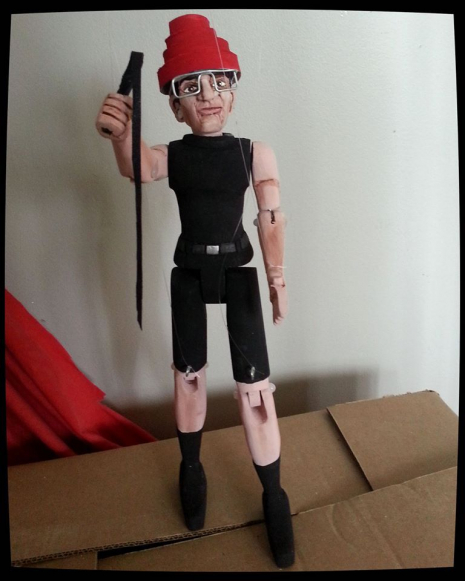
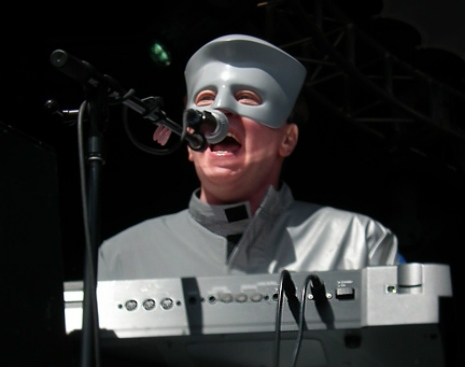
Mark Mothersbaugh of DEVO wearing his red energy dome.
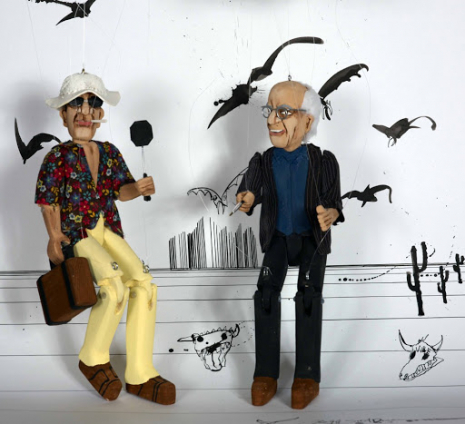
Hunter S. Thompson and Ralph Steadman.
Peter Gabriel.
Many more of Moreash’s marionettes after the jump…
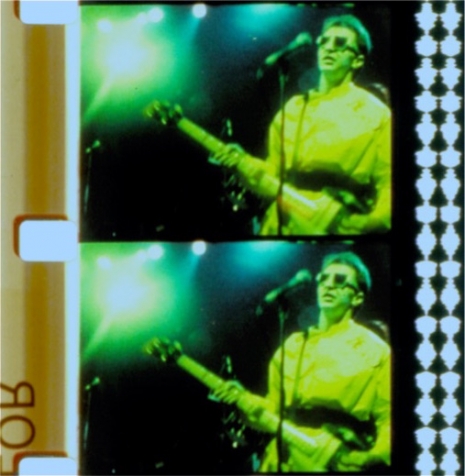
Entrées de Secours (Google translation: “Emergency Inputs”) is the work of French filmmaker, Jérôme de Missolz. From the late ‘70s through the early ‘80s, he filmed a number of notable acts at Le Palace, a Paris theater and the epicenter of the city’s underground scene. Using a Super 8 camera—and without any sort of formal credentials—he shot the Clash, the Cramps, Public Image Ltd., Richard Hell, Iggy Pop, and many others.
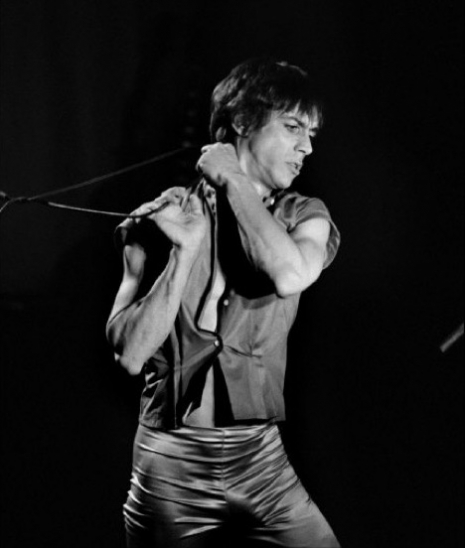
Iggy Pop on stage (and wearing a shirt!) at the Paris Palace, 1979.
De Missolz eventually assembled what he had captured to make Entrées de Secours. During the editing process, he synched up unrelated audio—from the likes of Cabaret Voltaire, Throbbing Gristle, the Stooges, as well as ‘60s pop hits—with his Super 8 footage, and then manipulated the elements further. Finally, he blew it up to 16mm. The result was an 18-minute experimental work. In a 2010 interview, (roughly translated from French into English), de Missolz said his aim was “to transcribe the fury of the link between the electricity of music and the loss of identity in cities.”
Jérôme de Missolz died in March of 2016.
Entrées de Secours came out in 1982, and isn’t exactly easy to come by these days. As of this writing, the film doesn’t appear to be obtainable for sale in any format, nor is it streaming online. To further give you an idea of its rarity, its IMDb page doesn’t have a single rating or review. The short can be rented in its original 16mm form through a French distributor, Collectif Jeune Cinema (Young Cinema Collective), but that’s apparently the extent of its current availability.
A one-minute excerpt has been uploaded to Vimeo by the French collective, giving us a tantalizing glimpse of Entrées de Secours. DEVO are up first in the clip, then Siouxsie and the Banshees, plus some additional footage is incorporated. For the soundtrack, de Missolz used “Yummy Yummy Yummy” and “96 Tears,” as well as some sound effects. The Super 8 visuals, combined with the unexpected audio—all shaped further by de Missolz—creates a dizzying effect. It’s all very strange and unreal.
Being a “band geek” has rarely ever won a high school student cool points. One would expect that a “Catholic high school band geek” might fare even worse—yet one marching band of young badasses in Atlanta is bucking the trend.
Let me note here that I personally reaped the rewards/suffered the consequences of a Catholic grade school education myself—and I’m still a “geek,” and consider the word a term of endearment—lest anyone think I’m being unfair to Catholics or geeks or whatever. Continuing…
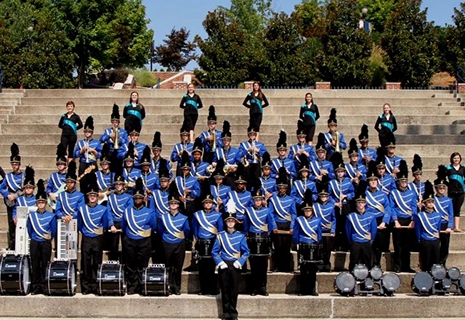
Saint Pius X’s Marching Golden Lions are winning the Internet this week with their renditions of DEVO, Gary Numan, Berlin and other new wave bands’ hits.
The Marching Golden Lions
The Marching Golden Lions seem to be having fun with their arrangements of ‘80s new wave standards which can be seen in the video clips below.
We’re not sure how much influence band director Chad Paetznick had over the choice of songs performed by the band, but even if it was all his idea that’d still make him one of the coolest Catholic high school marching band directors ever. If the students picked the songs, then we’ll just say that they have excellent taste in golden oldies.
Paetznick’s still gotta win some kind of “coolest band director” award though: according to Saint Pius X’s school newspaper, he took the band to the Third Man Records studio to record their drum cadence and fight song with Jack White while they were in Nashville for the Vanderbilt Marching Invitational. Not every high school marching band in the world gets to record with Jack White.
You’ll want to check out all three clips here. These kids rule.
Here’s the Saint Pius X Marching Golden Lions performing DEVO’s “Girl U Want.” Dig the dude walking by who gets really into it at 0:37 and check out the breakdown at 1:30:
The Blue Ribbon Glee Club is a Windy City-based a capella group who’ve been performing covers of classic punk and indie rock since 2007. In 2009, they released their E.P., A Capella Über Alles, on Whistler Records, the house label of my absolute favorite cocktails-and-music bar in Chicago. It should be noted that both the group’s formation and the E.P.‘s release predate the debut of that one TV show. It was about, like, a choir or something? I forget what it was called.
For the record, The Blue Ribbon Glee Club has been around since March 2007. We’re predominantly a live performance group. For us, it’s not about whitewashing rock and roll, it’s about using our voices to embody the same power and dirt that ultimately drew us to the songs we cover. But sure, some of it sounds pretty.
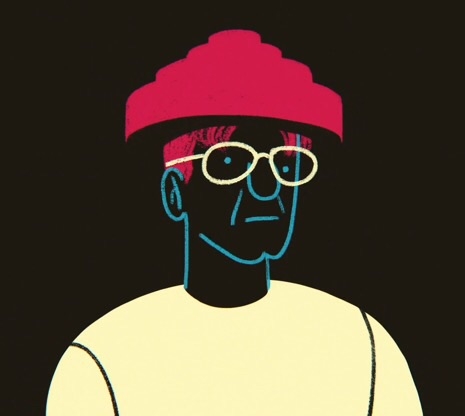
Midwesterners are quick to claim DEVO as native sons (as well we should—shout out to Akron, Ohio!), but this lovely little animation—a collab between Google Play and The California Sunday Magazine—illustrates their Hollywood migration in Mark Mothersbaugh’s own voice. But not before the prolific composer/artist/frontman/fashion designer (etc, etc, etc.) explains how he saw the world—fuzzy—until someone had the bright idea to test his vision when he was in the second grade.
I will say I feel like a complete dick after watching it. I had always subconsciously assumed Mark Mothersbaugh’s glasses were a bit of a nerd affectation/fashion choice (nothing wrong with fashion, and to be fair, they were certainly fashion for a couple of of DEVO fans I’ve met). Don’t get me wrong, I figured he needed specs, but I suspected the heavy frames of said specs were chosen more for their ostentatiously geeky aesthetic than mere functionality. Turns out there’s a lot of glass in those glasses, because he is legally blind and needs them to see damn near anything.
It also turns out that I am a cynical jerk. Sorry Mark!
Celebrity wines are fairly common, even Megadeth bonehead Dave Mustaine has one (along with Tool’s Maynard James Keenan, Primus’s Les Claypool and, of course, Sting), but for founding DEVO member Gerald Casale to start his own wine estate and brand, 50 by 50, is a downright subversive act.
Jerry grew up in Akron, Ohio at a time when being around good wine was still confined to families with money. Self-taught working-class sommeliers and oenophiles were not populous groups. He told wn.com:
Listen, I grew up blue-collar in Ohio. I ate what people ate there, which was basically macaroni and cheese, pizzas, overcooked brown rump roast, bologna sandwiches … any cheese was Velveeta and any wine was Night Train.
Moving to California with the band in the ‘70s, he became interested in wine and over the years educated himself in the finer details of his hobby here and abroad, visiting vineyards while on tour. A life-changing epiphany-like wine boner occurred in France when a tour promoter gave him a glass of Domaine de la Romanée-Conti. “Discovering wine is one of the most special experiences you can have, like seeing a great film or falling in love,” he said in an interview with Wine Searcher. “When you taste a great wine, and you haven’t grown up privileged to be around wine, that makes you understand why people talk about wine. It’s unforgettable.”
When we signed with Warner Bros. Records and moved to California [in the late 1970s], a world opened up to me. We hit California not only when there was an explosion in the music scene, but there was a revolution in cuisine. All the restaurateurs were now famous and had cookbooks out and were new and young and were stretching food consciousness… I met them all, and they were DEVO fans! I got to eat and drink in their restaurants and ask a lot of questions. I started from zero and learned and learned and learned. Touring completed the picture. In Europe, I was able to visit vineyards. It was a revelation.
Eventually Jerry was well versed in wine lore to be qualified to work for the Wine House in Los Angeles, teaching classes about wine appreciation for three years in the ‘90s when DEVO was not active. (Interestingly, the Davis Enology & Viticulture Organization program at UC Davis’s acronym is DEVO). He is down to earth, completely lacking in snobbery, and talks about wine like a normal person, not like a pretentious ass. He described his wine classes as being unintimidating:
I taught beginning and intermediate courses. But I guess I had the same basic advice for them that Famous Amos (Cookies) did: ‘Start from where you are’. Quit worrying about it. Let’s demystify things. Wine is 50 percent farming and 50 percent artistry. But the farming is really the foundation. It’s as easy as ‘I like oranges, I like bananas, but I don’t like pineapples.’ You don’t like zinfandel? Fine, don’t worry about it, no matter who shoves a zinfandel at you and says ‘this will blow your mind and it’s $300 a bottle.’ You can find decent wines at every price point.
In 1985 he was set to buy land in California on which to start a vineyard but this plan was scrapped when Warner Brothers dropped DEVO. Four years ago he was still talking about starting his own vineyard with a partner, going so far as to have soil tests done in Napa, and now with the help of winemaker Kenn Vigoda, he has started a 23-acre estate, with a tasting room based on the “50 by 50 house,” the legendary, never-built, 60-year-old blueprint of a glass house designed by architect Mies Van Der Rohe (one of whose apprentices was the grandfather of musician and producer Vess Ruhtenberg). The DEVO merchandising potential for the 50 by 50 estate is endless, aside from pun-heavy wine names. DEVO energy dome hat wineglass charms?
When you get a great bottle of Burgundy, it blows away a great bottle of anything else. You can drink your way through mediocre Burgundies in the pursuit of the ultimate one, so it’s a holy grail quest. What I love about Burgundy is that the wine is so friendly when you get a good one, and it doesn’t leave you beat up. It’s so personal with the food—anything from grilled salmon to lamb chops to duck. You can even have it with some pizza.
Luckily, there’s a certain amount of middle class egalitarian ethic left in the wine world. The rest of the world has gone back toward medieval times when 10 people owned everything and everyone else was serfs.
“Wine Booty” with Gerald Casale, taped in front of a live audience of wine aficionados in Napa Valley back in May:
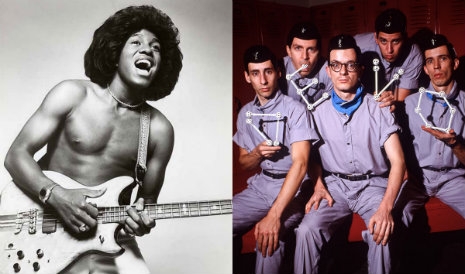
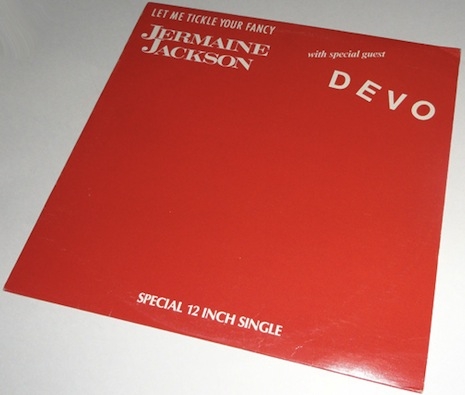
Everyone who writes about this song emphasizes how unlikely a pairing it is ... and most everyone concede that the song works perfectly well. Erik Adams at the A.V. Club at least had the wit to point out a few basic similarities that DEVO and Jermaine share, such as growing up in tough Rust Belt towns.
If it was Jermaine’s idea to seek out DEVO, it was a good one, and Mark Mothersbaugh and Gerald Casale—introduced here as “Spud and Pud Devo”—gamely agreed to pitch in. The song ended up cracking the top 20 on the Billboard charts in August of 1982.
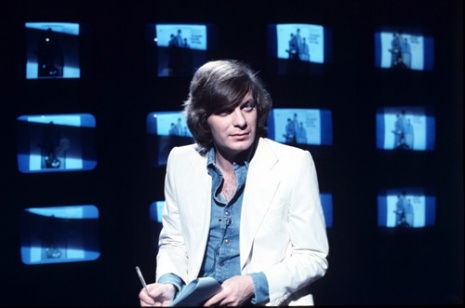
I’d love to know what TV special this was, exactly; Adams identifies it as a “Dick Clark Productions Halloween special.” Anyone who is old enough to possibly have been watching at the time (I am, but I don’t recall catching it) will surely be able to identify the MC as funnyman Fred Travalena—he was the kind of guy to whom the identifier “funnyman” just comes naturally. (He did impressions, like Rich Little, Kevin Pollak, or, ah…. Frank Caliendo?)
In any case, it’s a Halloween special, as evidenced by the occasional camera pans over a pair of hearty jack-o’-lanterns. As I tried to figure out who changed to accommodate whom, DEVO or Jermaine, it became clear that nobody did—it turns out that DEVO and Jermaine fit together just fine exactly as they are.
But what makes this video truly special is Jermaine’s ... extraordinary technique on the guitar.
MOCAtv is the Museum Of Contemporary Art’s YouTube channel. MOCAtv has been showcasing some well-produced and very hip programs about art and music. One that is of particular interest to me is a series of short pieces on experimental filmmaker and artist Bruce Conner and his collaborations with Devo, Brian & David Byrne and Toni Basil. Conner began creating film collages composed of found footage, newsreels, animation and distressed celluloid back in the early 1960s and his style has been an undeniable influence on the MTV generation of video directors. His 1961 short film Cosmic Ray features Ray Charles singing “What I’d Say” set to a darkly psychedelic montage of go-go dancers, nuclear age imagery, cartoons and war footage that still carries some of the shock value that must have nailed viewers to the floor back in the early Sixties. Punk before punk.
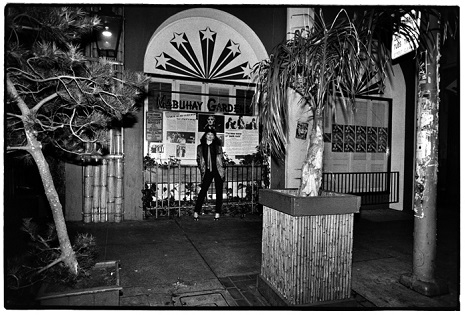
In the mid-Seventies when punk erupted like the mushroom clouds in Cosmic Ray, Conner found a kindred artistic spirit in the subversive, often surreal, high-energy and over-the-top groups that were upending rock and roll in much the same that he himself had done with the visual arts more than a decade earlier. Conner’s creative juices were primed by punk and he spent many nights in the late Seventies hanging out with and photographing musicians at San Francisco’s Mabuhay Gardens.
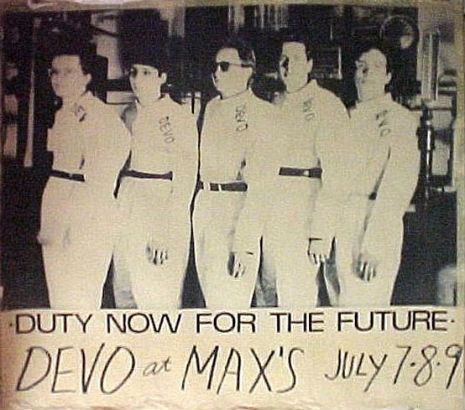
One of the bands that really connected with Conner’s dada sensibilities was Devo. In this episode of MOCAtv, Devo vocalist, bass guitar/synthesizer player Jerry Casale talks about his encounters with Conner and the film that Bruce made for Devo’s “Mongoloid.”
In 1966 Conner made a film featuring Toni Basil dancing to a Northern Soulish single she had just released called “Breakaway.” It’s an amazing work on many levels—Basil’s dancing is exquisite, her nakedness is taboo-shattering: no female pop singer in the Sixties was so fearless and open—and there’s Conner’s gorgeous black and white photography and trippy editing. The film for “Breakaway” was, and still is, a fucking stunner. Conner’s buddy Dennis Hopper held the lights for the Breakaway shoot and ended up casting Basil in Easy Rider. I wonder if Kate Bush ever saw Breakaway. Basil and Bush are on similar wavelengths and after seeing Conner’s film I’ve become a Basil devotee. This ain’t no “Mickey.”
Toni Basil recounts her experiences with Conner in this episode of MOCAtv.
These presentations of MOCAtv were produced by Matthew Shattuck and directed by Chris Green.
The photos featured here of Devo in performance and Toni Basil in front of Mabuhay Gardens are both from 1978 and were taken by Conner. This is their Internet debut and they were provided to Dangerous Minds exclusively by the Conner Family Trust. We’re thrilled to be able to share them with you.
Watch the uncut (NSFW) version of ‘Breakaway’ after the jump…
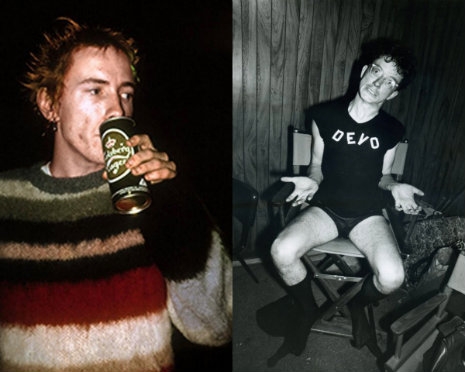
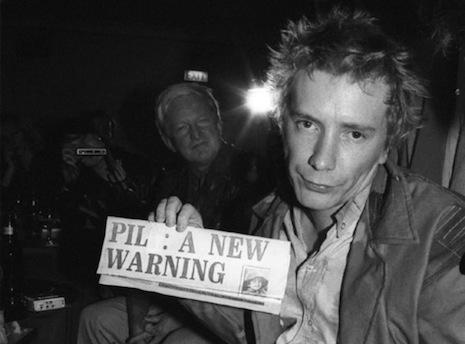
It’s hard for me to imagine anyone but Mark Mothersbaugh doing the lead vocals for Devo, but did you know that for about ten minutes in 1978 there was a real possibility of John Lydon taking over the singing duties for Devo? (Actually, that’s not quite accurate—he was still known as Johnny Rotten then; there was no such thing as Public Image Ltd yet.)
The story comes from Mothersbaugh, who’s told it many times—if interviewers ask him about it, he’s just as happy to tell it all over again. I first encountered it in Marc Spitz and Brendan Mullen’s We Got the Neutron Bomb: The Untold Story of L.A. Punk:
Richard Branson called me up in Akron in the winter of 1978 and said, “Hey, you wanna come down to Jamaica?” And I looked out the window and said to myself, “Well, it’s snowing about thirty inches here. Sure, I’ll come down to Jamaica.” So he flew Bob Casale and I down there to meet him and Ken Berry. We were all just sitting around in the Kingston Holiday Inn and he brought out this big stash of pot and Branson is rolling these gigantic joints on a newspaper and we’re used to being in Akron where you get enough to make a paper-thin joint. We were talking to him about playing Mabuhay Gardens the night after the Sex Pistols’ last show at Winterland and how we were staying over at Search and Destroy magazine, we were using Search and Destroys for mattresses. And we talked about how the Sex Pistols came over to the office, Sid and Nancy, and we were hanging out. And Branson said, “What do you think of them?” And we said, “They were all nice guys. You know. It was fun meeting them. It’s too bad that they broke up.” And Branson said, “I’ll tell you why you’re here. Johnny Rotten is down here at the hotel. He’s in the next room, and there are reporters downstairs from the New Musical Express, Sounds, and Melody Maker. I’d like to go down to the beach right now, if you’re into this, because Johnny Rotten wants to join your band … and I want to announce to them that Johnny Rotten is the new lead singer for Devo.” And I’m going, “Oh my God, I’m really high right now.” Regrettably, I didn’t just go, “Yeah, sounds great. Send him to Akron. He can do it for a week or two, just for the hell of it.” It was a weird time for us.
The Mothersbaugh-Lydon connection doesn’t stop there, though. Apparently Mothersbaugh was instrumental in guiding Lydon in the eventual direction of PiL. In some versions of the story, Mothersbaugh goes on to explain that, since they were all high and all, he and Casale were laughing manaically, and in between bouts of laughter proposed to Branson that they help Lydon figure out his next combo instead: “We just started laughing at them until tears were coming out of our eyes and we were choking, and we’re like, ‘It’s not you, Richard. We’re not laughing at you. We love Johnny Rotten. That’s great. But what if we just help him start a band.’”
There may be something to this. Many have noted the complete tonal switch that existed between the Sex Pistols and PiL, and the more austere critique/adoption of the corporate ethos does seem right out of Akron, as it were.
The story concerns a conversation between Mothersbaugh and Johnny Rotten, shortly after the breakup of the Sex Pistols. Mothersbaugh “suggested that Rotten lose the safety pins and shredded shirts and adopt a corporate approach, that screwing with convention was edgier than spitting at it. Perhaps in response, Rotten dropped his stage name and John Lydon formed Public Image Ltd., defining the post-punk aesthetic in the process.” Exactly how much “credit” Mothersbaugh should get for PiL is beside the point, which is that overorthodox thinking had already become second nature for Mothersbaugh and Casale.
To me the whole thing is fascinating—Lydon’s early interest in Devo, Branson’s insatiable drive to make something happen, Mothersbaugh’s half-conscious (and probably correct) rejection of the idea.
Would the world never have heard of Jah Wobble? Would Lydon really have participated in the soundtrack to Dr. Detroit?
Alan Myers, Devo’s drummer from 1976 to 1985, has died of cancer.
Devo’s Gerald Casale praised Myers on Twitter:
... the most incredible drummer I had the privilege to play with for 10 years. Losing him was like losing an arm. RIP!! I begged him not to quit Devo. He could not tolerate being replaced by the Fairlight and autocratic machine music. I agreed. Alan, you were the best – a human metronome and then some. A once in a lifetime find thanks to Bob Mothersbaugh. U were born to drum Devo!”
Myers laying down his indelible and deeply quirky groove:
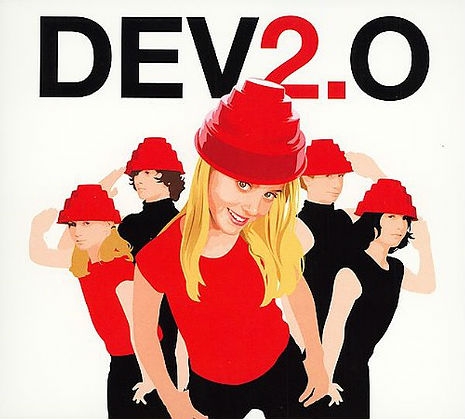
Unless you’ve got kids, are a really big Devo fan, or some pervy Nickolodeon-watching weirdo, Devo 2.0 (or DEV2.O) the 2006 reworking of some of the group’s best loved songs for The Walt Disney Company might’ve passed you by.
Disney?Devo?Wha? It’s the ultimate sellout, sure, but tell me that you wouldn’t have done the same thing if Disney came a knockin’ and you were in their shoes? Especially in their shoes! This isn’t merely the ultimate sellout, hell, it’s perhaps one of the ultimate acts of (practically real time!) devolution in action.
Do you feel that this sort of consumer-based art conflicts at all with the critique of consumer culture that you were doing with Devo?
Mark Mothersbaugh: Not at all. In fact, we used to get criticized back in the early days of Devo because, to us, what we were about, back before it was very cool to be into merchandise, we thought of our album cover as a place where we could do the inner-liner sleeves… as a matter of fact, if you look at any of the old Devo records, our inner-liner sleeves were always a merchandise page. We thought of it like the back page of a comic book where you’d see all the things you could order. Smith-Johnson novelties, stink bombs, baking powder-propelled rockets and X-Ray specks and all that kind of stuff. I loved that page of a comic book every time and I always looked at that stuff and sometimes would order it, and the Devo albums, we wanted them to be like a Cracker Jack box where you’d have a prize in there. I remember in 1978 when we put out our first album, and somehow our manager also managed Neil Young, and I remember Neil Young going, ‘You guys, I don’t know what you’re doing bringing merchandise into rock n’ roll that’s so uncool!’ Of course now, all these years later, he sells a ton of t-shirts and DVDs and things. But at the time he thought it was kind of sacrilegious, and we’re like, ‘You don’t understand! This is all fun! Rock and Roll is better than that!’ It’s like, everything that turned you on when you were a kid, you should still be able to be part of it. So for us, we thought the merchandise just had to be smart instead of stupid. So we tried to do smart merchandise, and I’m still trying to do smart merchandise.
Devo 2.0 seems like it’s fairly well-aligned with their shtick, when you put it that way. Plus, getting kids normally seen in “Honeycomb” commercials to mime along to songs about sexual frustration, reverse Darwinism and corporate fascism in colorful music videos and of course, all paid for by one of the largest media corporations in the world, must’ve seemed like a winning idea—I guess—until they actually realized what these kids would be singing about…
AVC: Oddly enough, one of the thing that really brings home the sexual undercurrents in Devo’s songs is the Devo 2.0 project from 2006, where you and Disney assembled a group of tweens to sing revamped versions of Devo songs. Not only is “Girl U Want” changed to “Boy U Want,” but the references to watering mouths and an “aroma of undefined love” are completely reworked.
Gerald Casale: That’s the best story. The Disney people, in the beginning, go, “Hey, how would you like to repurpose your material for a 4-to-8-year-old audience?” And we went, “Really?” They said, “Yeah. We want you to do a whole DVD. What would you do?” They gave us about a week to think about it. And I said, “Well, what if we did it like The Monkees? What if we cast a bunch of kids that can actually sing and play, and they will play Devo songs, and I’ll shoot videos with them, and we’ll tour them at middle schools.” “Yeah, that’d be great. But we want to pick the songs.” And we said okay. So they picked 12 songs. What’s fantastic is, they must never have actually listened to those songs. Because deep into the picture, at the phase where we’ve recorded everything and we’re shooting the videos and I’m turning in a video budget—it’s at that point that somebody upstairs in the Disney Taliban would like to see all the lyrics printed out. I don’t think I’m hiding anything, so I send the lyrics. Oh my God. Unbelievable, the next thing that happened—the firestorm that started. They’re poring over these lyrics, executives in their 30s and 40s, suits at Disney poring over these lyrics and for the first time paying attention to the songs they loved and picked. So it was like, “So listen, um, ‘Beautiful World.’ We’d really like that on the DVD, but you can’t say ‘It’s a beautiful world, but not for me.’” And it was like, “Oh really? Gee, that was kind of the whole point. What can we say?” The guy goes, “How about ‘for me too?’” And it just got better from there.
My favorite of all was—there’s a verse in “That’s Good” that I wrote the lyrics to in 1982. And the verse goes, “Life’s a bee without a buzz / It’s going great ’til you get stung.” Meaning, basically, you can get surprised. You can get ambushed, and that’s the point. They go “You gotta take that whole verse out of there, or replace it with another verse, or edit the song.” And I’m going, “What do you mean?” They go, “We know what you’re talking about, Casale.” And I go, “What do you mean? What am I talking about?” They go, “‘Life’s a bee’ means ‘Life’s a bitch.’ ‘Without a buzz’ means unless you’re getting high. And ‘It’s going great until you get stung,’ meaning as long as you get away with it, unless the cops pop you.” And it was like, “Who was I talking to here? P. Diddy?” Their sensibility had been so formed by hip-hop and current music that they were reinventing meanings in my words to go along with urban street culture now. The words were written 30 years ago, basically. You went beyond getting mad to just like going, “This is proof of devolution. This is it.” We thought it was really funny.
The final one was “Uncontrollable Urge.” That just had to come off the record. It was like, “What do you mean?” “Well, Mark, we know what ‘Uncontrollable Urge’ is. It’s sex.” And Mark goes, “Well, I never say that in the song.” And they go, “Exactly. It never defines the uncontrollable urge, so therefore you think it’s sex.” And he goes, “So if we define the uncontrollable urge, it would be okay?” “Yeah, I guess that would be okay.” They said, “Make it about junk food, then.” Mark just like threw up his hands and walked away, and I wrote a couplet for the pre-chorus: “Before dinner, after lunch, I get a snack attack and I need to munch.” And they went, “Now that’s great.” So here was this 13-year-old girl, just on the verge of growing breasts, singing that couplet, and you wouldn’t think that anybody would let you do that. So they made it far dirtier than it was, and we thanked them. [Laughs.]
AVC: So it’s okay for a 13-year-old girl to sing about eating disorders, but you can’t say “mist,” because we don’t know what that is.
Gerald Casale: Because those are bodily fluids. We know when it’s wet, it’s desire.
The music alone (played by members of Devo) isn’t the full package, you have to see the videos for that. The best thing about this project—other than that it exists in the first place—are probably those trippy videographics. One of the reviewers on Amazon called the Devo 2.0 DVD a musical gateway drug for kids.
Below, Devo 2.0’s take on “Freedom of Choice.” The frowning tween on keyboards is Jacqueline Emerson, who grew up to play the character of “Foxface” in The Hunger Games.
Gerald and Bob Casale tell their awesome Disney story…
I miss Tony Wilson. I miss the idea of Tony Wilson. Someone who had an enquiring mind and was full of intelligent enthusiasms, like Tony Wilson. And who also didn’t mind making a prat of himself when he got things wrong. Or, even right.
I met him in 2005 for a TV interview. He arrived on a summer’s day at a small studio in West London. He wore a linen suit, sandals, carried a briefcase, and his toenails were painted a rich plum color - his wife had painted them the night before, he said.
Wilson was clever, inspired and passionate about music. He talked about his latest signing, a rap band, and his plans for In the City music festival before we moved onto the Q&A in front of a camera. He could talk for England, but he was always interested in what other people were doing, what they thought, and was always always encouraging others to be their best. That’s what I miss.
You get more than an idea of that Tony Wilson in this compilation of the best of his regional tea-time TV series So It Goes. Wilson (along with Janet Street-Porter) championed Punk Rock on TV, and here he picks a Premier Division of talent:
Sex Pistols, Elvis Costello, Buzzcocks, John Cooper Clarke, Iggy Pop, Wreckless Eric, Ian Dury, Penetration, Blondie, Fall, Jam, Jordan, Devo, Tom Robinson Band, Johnny Thunder, Elvis Costello, XTC, Jonathan Richman, Nick Lowe, Siouxie & the Banshees, Cherry Vanilla & Magazine….. The tape fails there!
The uploader ConcreteBarge has left in the adverts “for historical reference” that include - “TSB, Once, Cluster, Coke is it, Roger Daltery in American Express, Ulay, Swan, Our Price, Gastrils, Cluster & Prestige”.
So, let’s get in the time machine and travel back for an hour of TV fun.
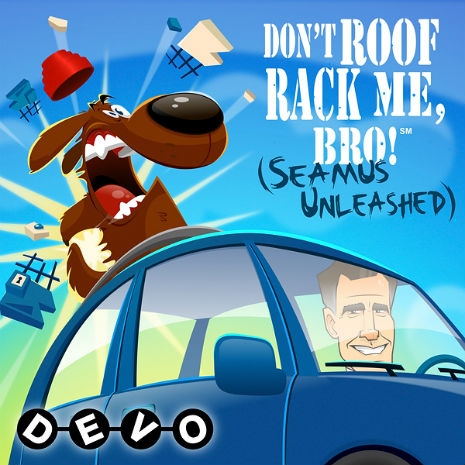
DEVO’s new song ‘Don’t Roof Rack Me, Bro! (Seamus Unleashed)’ hilariously mocks Mitt Romney for strapping his dog Seamus onto the roof of his car in 1983.
“This isn’t a red-state thing or Devo stumping for Obama,” he says. “But I think any animal lover that hears the story will learn so much about the character flaw of Romney. It’s just a deal-breaker about the man. My God, the world is a scary place with seven billion people. What you want in a leader is a guy with some humanity at his core. I just don’t feel that Mitt does.”
In 2008, Devo did a fundraising show for President Obama in their hometown of Akron. Does Casale approve of his job performance over the past three-and-a-half years? “No!” he says. “Absolutely not. Devo are not naive people. If anyone still thinks that the President of the United States of America runs things, they really live in the Wizard of Oz-land. My God, we’re a plutocracy. We’re owned and leveraged by global corporations.”
Listen to DEVO’s “Don’t Roof Rack Me, Bro!” below:
PS The GOP have a “Contact Us” form on their website. “Seamlus Taxdodger” (that would be uh… me, a “disgusted former GOP voter”) just left them a comment. Maybe you’d want to leave them a message, too?
This is raw video of an interview from the early ‘90s with Devo co-founder Jerry Casale that was intended to be used in a documentary on the band that was, as far as I know, never completed. But the footage as it is still serves as a wonderful history of Devo and an entry into the brilliant mind of Casale.
The fact that you can’t hear the questions being asked of Casale doesn’t diminish the interview in the least. It’s full of fascinating insights and anecdotes detailing the genesis, rise and continued success of one of rock ‘n’ roll’s truly visionary bands. Casale delivers all of this with wit and sharply observed truths about the art and business of pop music.
Spud-boy Casale is one very intelligent potato and this video should be mandatory viewing in high school art classes (if they still exist).
Unfortunately, there’s about six minutes missing from the interview that contains some musical content that was disallowed by Youtube for licensing reasons. If that situation changes, I will update this article.