
After England’s Riots: David Cameron calls for Social Media clampdown

image
 
In response to the English Riots, British Prime Minister, David Cameron announced a series initiatives to “do whatever it takes to restore law and order and to rebuild our communities.”

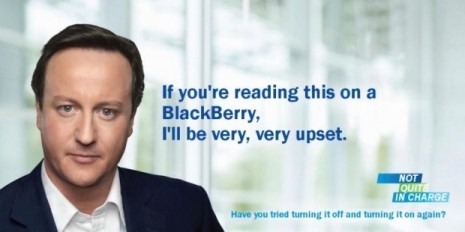
Amongst the suggested plans (including removal of face masks) was the rather disturbing news that Cameron plans to block access to social media such as Facebook, Twitter and Blackberrys.

In a speech to Parliament, Cameron said:

Mr Speaker, everyone watching these horrific actions will be stuck by how they were organised via social media.
Free flow of information can be used for good. But it can also be used for ill.

And when people are using social media for violence we need to stop them.

So we are working with the Police, the intelligence services and industry to look at whether it would be right to stop people communicating via these websites and services when we know they are plotting violence, disorder and criminality.

The Guardian reports that Facebook has responded to Cameron’s call for a clampdown on social networking sites by saying it has:

...already actively removed several “credible threats of violence” related to the riots across England.

The prime minister told parliament on Thursday that Facebook, Twitter and Research in Motion (Rim), the maker of BlackBerry devices, should take more responsibility for content posted on their networks, warning the government would look to ban people from major social networks if they were suspected of inciting violence online.

The home secretary, Theresa May, is to hold meetings with the three companies within weeks.

The police have promised to track down those suspected of inciting the violence on Twitter, but much of the planning for the disturbances took place in the relatively private world of the BlackBerry Messenger service.

A Facebook spokeswoman said: “We look forward to meeting with the home secretary to explain the measures we have been taking to ensure that Facebook is a safe and positive platform for people in the UK at this challenging time.

“In recent days, we have ensured any credible threats of violence are removed from Facebook and we have been pleased to see the very positive uses millions of people have been making of our service to let friends and family know they are safe and to strengthen their communities.”

Of course, any attempt to block access to the internet will require new legislation, which will lead to outcries about threats to freedom of speech and alike.

But wait, this isn’t a new idea - the Chinese do it regularly, Gadaffi has managed it and Iranian government claim they have a suitcase which can block the internet.

A little closer to home, the French have been punting this idea for quite some time, and earlier this year President Nicolas Sarkozy urged his G8 buddies that it would be a good idea to have:

...private, high-level, inter-governmental talks, in an attempt to work out a global strategy for Internet regulation.

Like the script to some dystopian film, It will be only a matter of time before Western Governments decide to regulate and control the internet on grounds of National Security, Public Safety, or Law and Order.

Which in the short term means, if Cameron gets his way, then it may not be Anonymous that ends blocking Facebook on November 5, but the Conservative government.


With thanks to Niall O’Conghaile
 

Posted by Paul Gallagher | Comments
Share
Guardian reports that Facebook has responded to Cameron’s call for a clampdown on social networking sites by saying it has: ...already actively removed several “credible threats of violence” related to the riots across England. The prime minister told parliament on Thursday that Facebook, Twitter and Research in Motion (Rim), the maker of BlackBerry devices, should take more responsibility for content posted on their networks, warning the government would look to ban people from major social networks if they were suspected of inciting violence online. The home secretary, Theresa May, is to hold meetings with the three companies within weeks. The police have promised to track down those suspected of inciting the violence on Twitter, but much of the planning for the disturbances took place in the relatively private world of the BlackBerry Messenger service. A Facebook spokeswoman said: “We look forward to meeting with the home secretary to explain the measures we have been taking to ensure that Facebook is a safe and positive platform for people in the UK at this challenging time. “In recent days, we have ensured any credible threats of violence are removed from Facebook and we have been pleased to see the very positive uses millions of people have been making of our service to let friends and family know they are safe and to strengthen their communities.” Of course, any attempt to block access to the internet will require new legislation, which will lead to outcries about threats to freedom of speech and alike. But wait, this isn’t a new idea - the Chinese do it regularly, Gadaffi has managed it and Iranian government claim they have a suitcase which can block the internet. A little closer to home, the French have been punting this idea for quite some time, and earlier this year President Nicolas Sarkozy urged his G8 buddies that it would be a good idea to have: ...private, high-level, inter-governmental talks, in an attempt to work out a global strategy for Internet regulation. Like the script to some dystopian film, It will be only a matter of time before Western Governments decide to regulate and control the internet on grounds of National Security, Public Safety, or Law and Order. Which in the short term means, if Cameron gets his way, then it may not be Anonymous that ends blocking Facebook on November 5, but the Conservative government.     With thanks to Niall O’Conghaile  " class="pin-it-button" count-layout="horizontal">


blog comments powered by Disqus