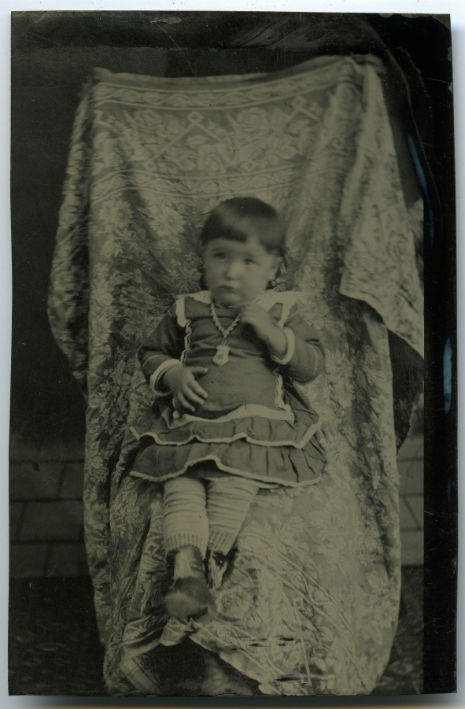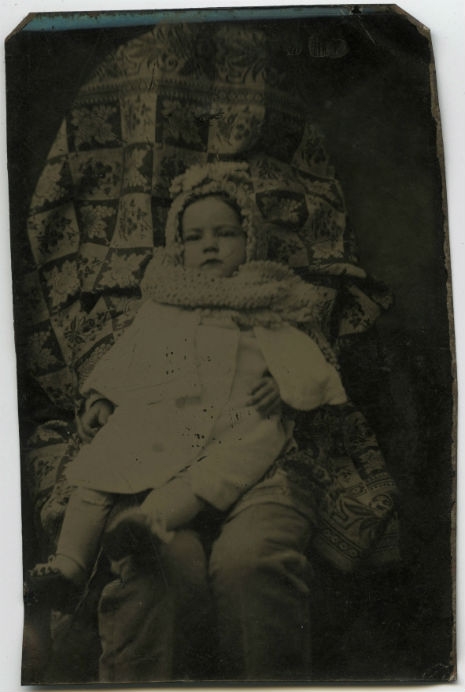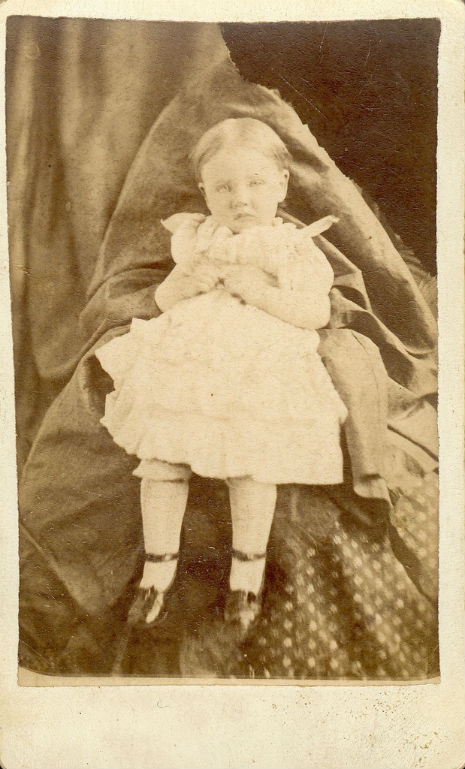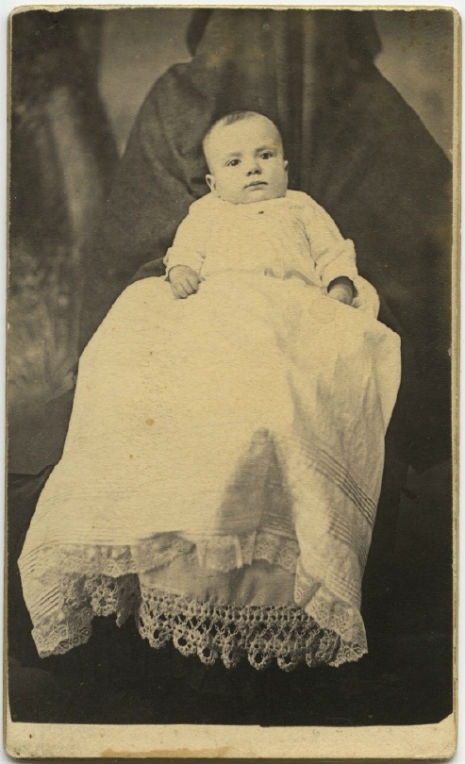
Ghost Mother: Creepy vintage baby portraits with mothers ‘hiding’
01.26.2012
11:01 am

Topics:
Art
History

Tags:
Photography
Hidden Mother


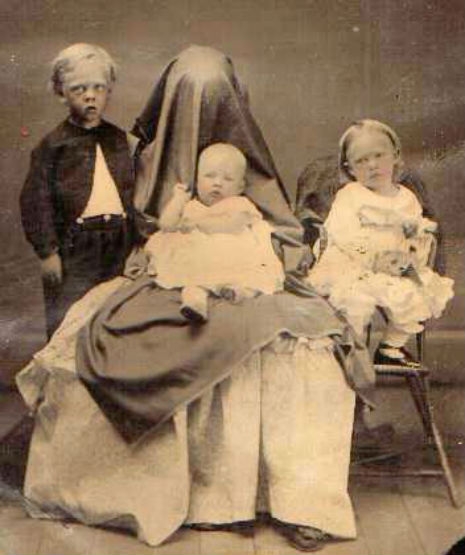
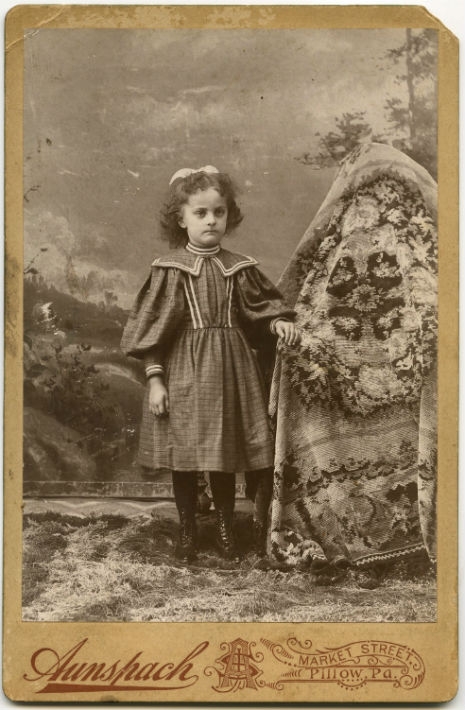
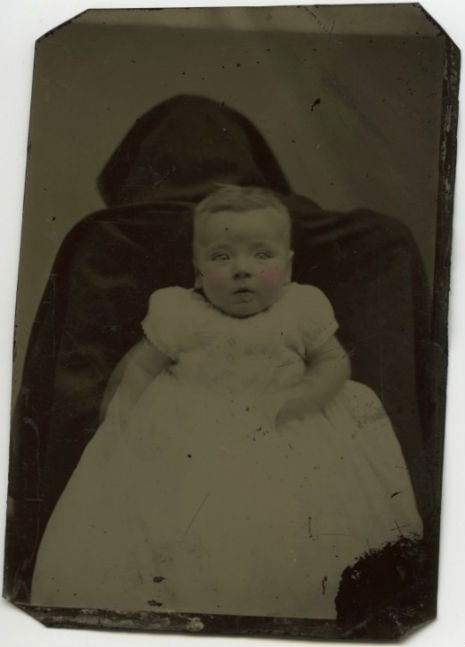
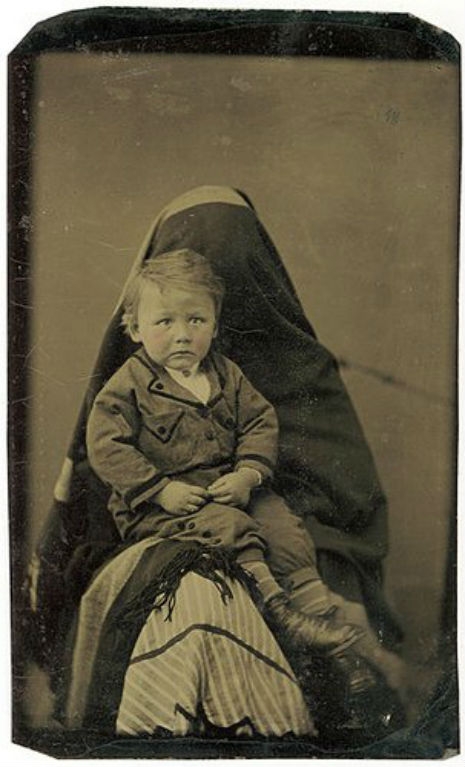
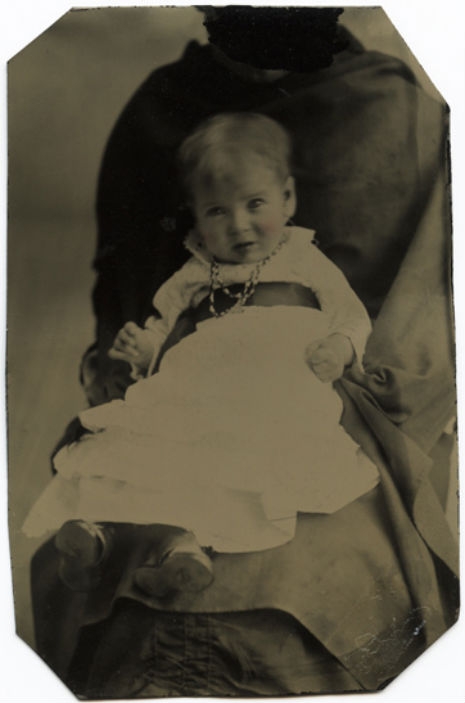
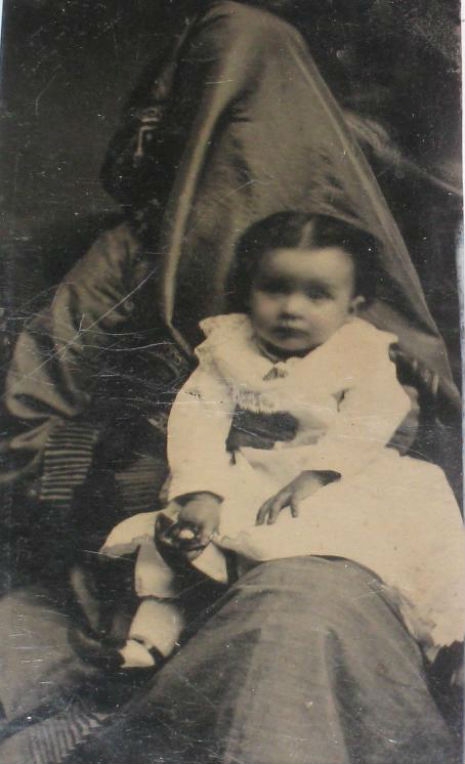
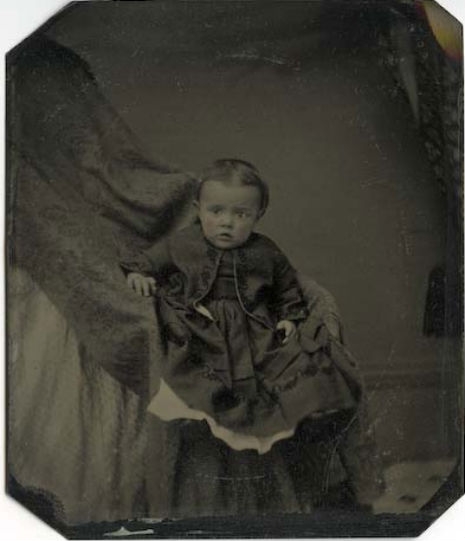
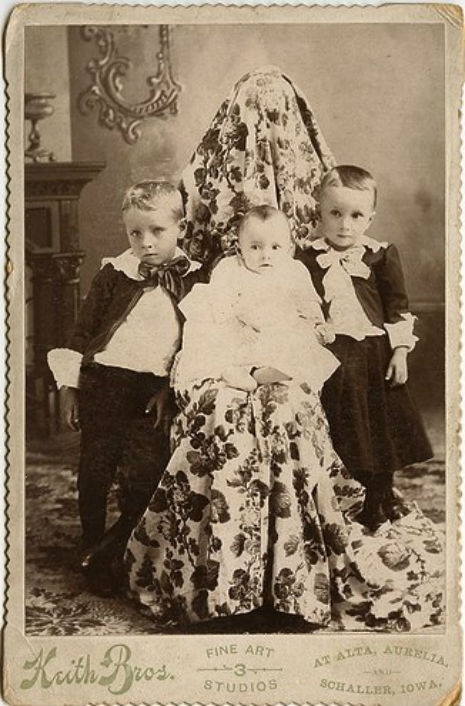
“Hidden Mother” was a 19th century portrait trend where mothers, who were basically dressed a “ghost,” would hold their young children still while being photographed. The end result was, well… haunting and creepy.

There’s a whole Flickr group pool dedicated to the “Hidden Mother” era.
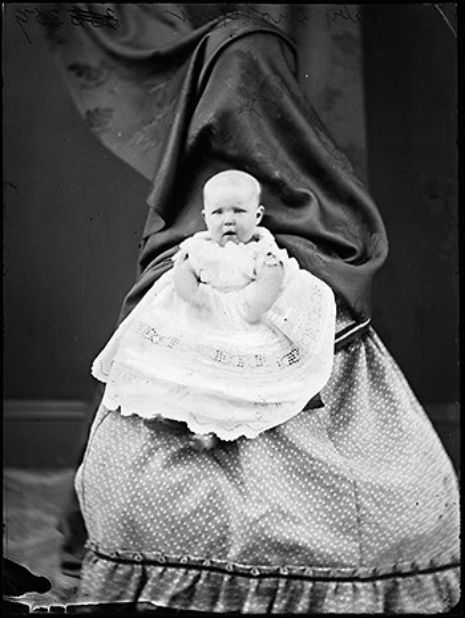


(via Hidden Mother: Tintypes and Cabinets)

Posted by Tara McGinley | 29 Comments
Share
Comments:
Jan 26, 2012
emefer says:

Don’t know, reminds me Afghanistan.

Jan 26, 2012
Chris says:

So the baby wouldn’t sit still for a picture, and the mother had to support? Or the kids are illegitimate and the mother doesn’t want the publicity?

Jan 26, 2012
am says:

why?

Jan 26, 2012
Drinky McGee says:

It looks like they were basically trying to make the mother a piece of furniture in order to accentuate the child. But clearly, the method is, um, flawed.

Jan 26, 2012
saucykitty says:

Back then, it took about 30 second-1 minute to get an image on “film”. This is why some older photographs look really blurry; the subjects moved.

So I’m guessing the mothers were there to make sure the kids didn’t fidget for the time needed to get a clear image.

Jan 26, 2012
Prunella says:

@saucykitty’s explanation makes the most sense, although if the case, you would think they’d attempt to obscure the fact that the mother was there at all… as in the last one, and a few others.

Jan 26, 2012
John says:

These are just photographs of women who were predestined to be ghosts.

Jan 26, 2012
walms says:

Its the first adoption agency lol.

Jan 26, 2012
Shanna says:

I think too, at that time, it was taboo for the woman of the family to have pictures of herself singularly, or predominantly in the home, particularly those on display.  You could have photos of your other female relatives, as well as your husband and children, but it was considered bad taste to have pictures of yourself as the woman in the home.  It was considered a sign of conceit, and proper women were humble.  My grandmother was born in 1901, and this was how she did it in her home and she chastised my mother for any photo of my mother in my mother’s home.  Plus I was lectured on this very point as well from both my mother and grandmother.  That’s why I think these women are covered up, plus keeping small ones still and calm.  Just goes to show how things have changed.

Jan 26, 2012
Brendan Fitzgerald says:

Because they were aristocratic nannies not mothers?

Jan 26, 2012
Jude says:

With older children and adults it was common to use metal neck holders to keep subjects still, so this looks like a more humane approach for infants…

Jan 26, 2012
Greg says:

@Shanna - thanks that explains a lot. It kind of goes along with other matter of decorum that seem so strange today - like it was bad taste to have fresh candles out that didn’t have blackened (pre-burned) wicks, or always leaving a swig of wine leftover on the glass!

Jan 26, 2012
du2l5r1 says:

i guess we know what the inspiration was behind the first beanbag. haha.

Jan 26, 2012
Marcos says:

As I understand it, the hidden mother phenomena was done for purely technical reasons, there is really no deep dark rationale behind as is often projected onto the photos.  The photos were meant to be of the children only, the kids were placed on the knees of their mothers to keep them still for the long exposure times and then cropped out of the photo, so the finished product all one would see would be a background and no one would be the wiser…which doesn’t fully explain the ones with more than one child but maybe it became standard practice for all child photography at the time…

Jan 26, 2012
Jerry Willman says:

Probally just a variation on “Death Photo’s”. Intsteead of the child being dead. Its the Mother who is Dead and covered since she has passed.

Jan 27, 2012
The man with no face says:

Acctually if you look closly you can see a face on the first photo.
My belief is that they are either all men or just Bog ugly women.
Thankyou

Jan 27, 2012
Jerry Willman says:

The first onewho appears to show a face. Its actually the pattern of the curtain along with tricks of light and shadow.

Jan 27, 2012
Business Photography says:

I suppose they did this because the exposure was so long it was the only way to keep the children still

Jan 27, 2012
Cole says:

# 8 appears to be a hidden father, or a mother in trousers.

Jan 27, 2012
Willie Lupo says:

Picture #4 shows a small girl standing beside someone covered, she didn’t need to be held in place for the exposure time.  Picture #8 appears to be a man under the covers, women did not wear pants during that period of time, especially to have a picture made.

Jan 27, 2012
BGal says:

People wanted pictures of their kids while they were young and sweet. Infant mortality was common. And a picture like this would cost the household as much as a months wages or more. It was VERY important that the kids stay still for the long exposure. The cropping comment and even propriety comment are spot on. This has nothing to do with pretending to be ghosts.

Jan 27, 2012
Eva says:

The mother is acting a dual role here. She is holding the child mostly babies who can’t sit up on their own - and acting as a backdrop. So it does make sense. But th images are printed full frame where as to crop in close would complete the illusion. It is not “mother as ghost” but mothe as BACKDROP”

Jan 28, 2012
Diana says:

As professional photographers, we’ve done this on rare occasion, but yes, cropped so you cannot see the holding person.

An adult at this time frame would have had the back of their head placed in a brace to keep them still for the length of time it took to expose the film plate.  If that was necessary for adults, how much more so for children!  Add in the fear of an unfamiliar situation, and you can see why the ‘hidden mother’ came into being.

Jan 28, 2012
Ree says:

Not one of them pictures has a smile. Eeerie!!!

Jan 29, 2012
Darius Akashic says:

if you like these then you should check out a book of photos called ‘Haunted Air’ by Ossian Brown of early American Halloween costumes - un-nerving and inspiring with a foreword by the genius David Lynch

‘Ossian Brown’s first book “Haunted Air” is published by Jonathan Cape in the UK on the 28th October. Focussing on Ossian’s phantasmagorical collection of early Hallowe’en photography, America c. 1875 - 1955, his unique and extraordinary book comes with an introduction by David Lynch and an afterword by Geoff Cox. “Haunted Air” is available for pre-order from the Random House website.

“The roots of Hallowe’en lie in the ancient pre-Christian Celtic festival of Samhain, a feast to mark the death of the old year and the birth of the new. It was believed that on this night the veil separating the worlds of the living and the dead grew thin and ruptured, allowing spirits to pass through and walk unseen but not unheard amongst men. The advent of Christianity saw the pagan festival subsumed in All Souls’ Day, when across Europe the dead were mourned and venerated. Children and the poor, often masked or in outlandish costume, wandered the night begging ‘soul cakes’ in exchange for prayers, and fires burned to keep malevolent phantoms at bay.

From Europe, the haunted tradition would quickly take root and flourish in the fertile soil of the New World. Feeding hungrily on fresh lore, consuming half-remembered tales of its own shadowy origins and rituals, Hallowee’en was reborn in America. The pumpkin supplanted the carved turnip; costumes grew ever stranger, and celebrants both rural and urban seized gleefully on the festival’s intoxicating, lawless spirit. For one wild night, the dead stared into the faces of the living and the living, ghoulishly masked and clad in tattered backwoods baroque, stared back.”

The photographs in Haunted Air provide an extraordinary glimpse into the traditions of this macabre festival from ages past, and form an important document of photographic history. These are the pictures of the dead: family portraits, mementoes of the treasured, now unrecognisable, other. Torn from album pages, sold piecemeal for pennies and scattered, abandoned to melancholy chance and the hands of strangers.”
www.randomhouse.co.uk

Jan 30, 2012
Bill Dee says:

I believe most images of that time did not have smiles for two reasons. 1) Having your photo taken was a serious matter (often fairly costly), and 2) because of the long exposure times, it’s difficult to smile that long and keep it without moving your mouth/lips, which caused blur.

Jan 30, 2012
Theilf says:

This is a fascinating post, and reading through the comments I learnt a little something. Both about photographic technique and old-tme decorum.

Also I noted the repeating of days-old information and very weak gags. I sometimes dread reading the comments on this site nowadays. Still enjoy the posts though. Sorry to whine but really, lift your game people.

Jan 31, 2012
Ani says:

i am pretty sure the mothers are dead in these photos

Feb 20, 2012
Mark Osterman says:

I just poster a wonderful hidden mother on my facebook wall. Would you like it for this site?

Page 1 of 1
Create a Comment

Name:

Email:

Location:

Remember my personal information

Notify me of follow-up comments?

Submit the word you see below: